
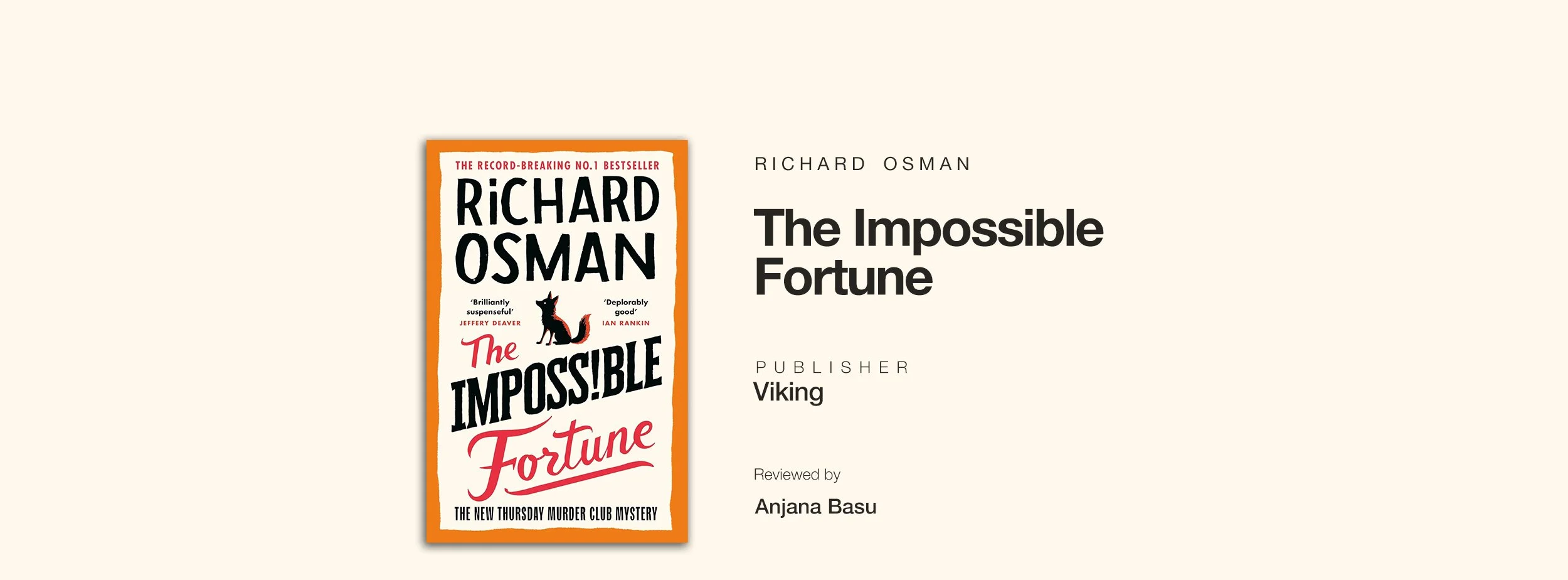

The Impossible Fortune marks another entertaining mystery from Richard Osman, who has carved out a distinct niche in contemporary crime fiction: gentle but clever mysteries laced with wit, compassion, and an ensemble of characters readers feel they truly know. This new novel takes his trademark charm into territory that is slightly larger, slightly twistier, and perhaps a shade more sentimental.
At its best, The Impossible Fortune showcases Osman’s strengths. The plot is brisk, inventive, and satisfyingly layered without ever becoming grim or overwrought. Osman balances humour with emotional warmth—something few crime novelists manage this deftly. The dialogue sparkles, the asides are deliciously dry, and the sense of companionship among the characters remains the heartbeat of the story. Readers who turn to Osman for comfort as much as for mystery will find plenty to enjoy.
Where the book surprises is in its ambition. The stakes feel higher, the secrets more tangled and the narrative structure more adventurous than in his earlier work, though this could be a result of his work on We Solve Murders, another high stakes plot with a high body count. Osman also invests more in emotional backstories, giving certain characters moments of vulnerability that deepen their appeal.
Joyce’s relationship with her daughter reveals a different, more vulnerable side to her, capturing the complicated nature of mother–daughter bonds with Osman's usual light touch. Ron’s own family troubles provide a gripping subplot, as his gangster son-in-law swears revenge on the entire Ritchie clan. This storyline brings Ron into the spotlight in a way that feels overdue; he’s often been more of a background presence, so seeing him take centre stage is particularly satisfying.
Ibrahim’s regular counselling sessions with drug-lord Connie Johnson remain a highlight. Their unlikely rapport is both humorous and unexpectedly touching. And Elizabeth, meanwhile, is simply doing her best to get through each day, her quiet resilience adding a gentle poignancy to the narrative.
There is a sense that he is pushing gently at the boundaries of his own formula—trying out more elaborate motivations, more moral greyness and a broader canvas that brings new settings and new personalities into play. It’s a novel that wants to entertain but occasionally also wants to move you.
That said, The Impossible Fortune is not without its minor flaws. Some readers may feel that the plot takes a little time to find its rhythm, or that the charm occasionally edges into sentimentality. A few twists rely on coincidence rather than deduction, and readers who prefer tightly plotted, purely cerebral mysteries may find the novel leaning more towards character-driven storytelling than procedural logic. Osman’s fondness for cosy banter sometimes slows the pace at moments when the suspense could have tightened.
And yet, these quibbles don’t undermine the novel’s overall pleasure. Osman continues to offer what he does best: an irresistible blend of suspense, warmth, and gentle comedy wrapped in a mystery that keeps you turning the pages. The world he creates feels lived-in and welcoming, the kind of fictional universe readers return to not for the crimes, but for the company. There is also a deeper undercurrent in this book—a quiet meditation on luck, legacy, and the unexpected ways in which fortunes shift over a lifetime.
In short, The Impossible Fortune is another enjoyable, engaging, and quietly touching addition to Osman’s fictional world. Fans will be delighted by the familiar rhythms elevated with fresh energy, and newcomers will find it an inviting entry point into his universe of kind-hearted crime. It confirms Osman’s place as a storyteller who understands that mysteries are not only about solving puzzles but also about celebrating the imperfect, endearing people who inhabit them.