
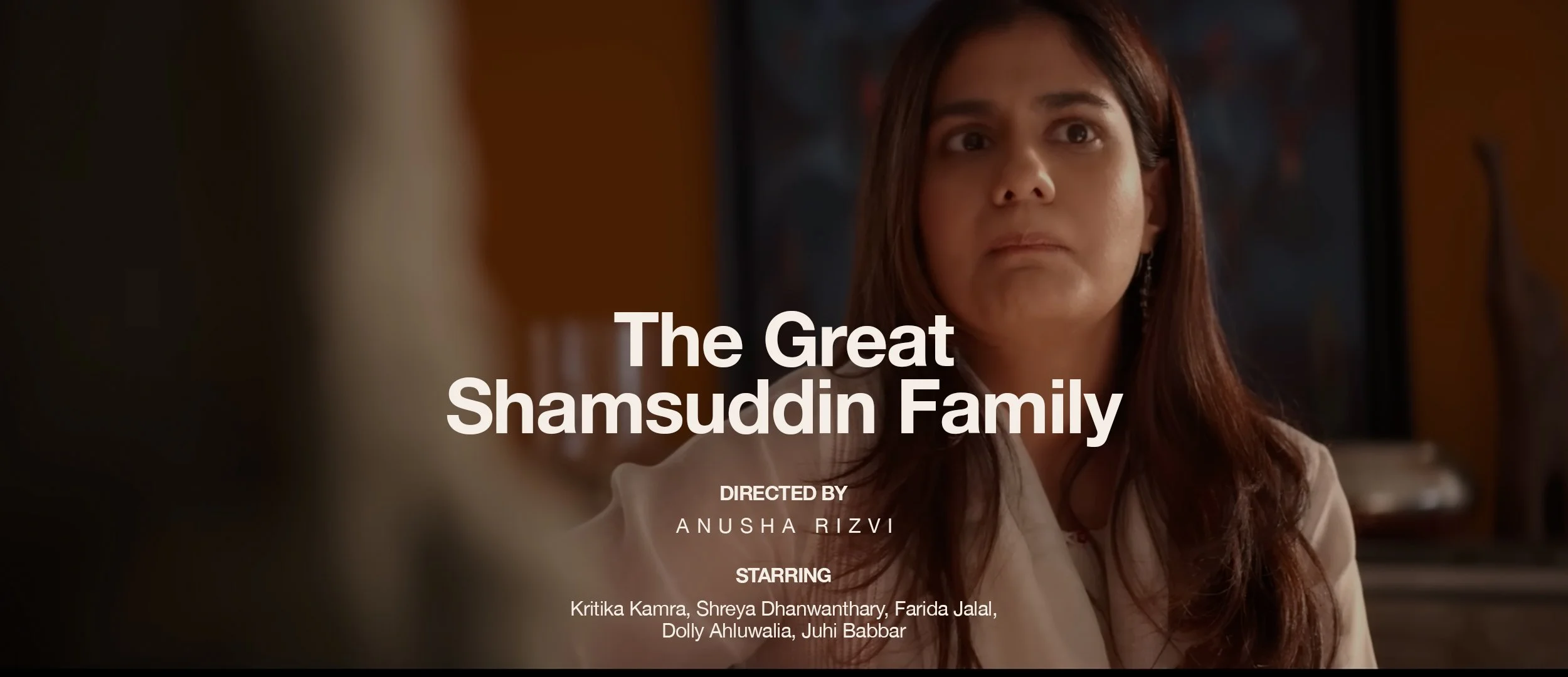

One room in Delhi. Approximately 12 hours. Purpose and chaos, all rolled into one.
The calm-headed, studious, and disciplined Bani has a near-impossible deadline to meet. It’s for a job abroad, far away from her family, far away from her country of origin. She plans to wrap it all up today, hopefully with time to spare.
And that is when it all goes to hell.
Her scatterbrained, gullible cousin, Iram, comes calling. With a bag full of cash. Twenty-five lakhs. Alimony paid by her ex-husband. But the crux of the matter was her having withdrawn twenty-five lakhs prior, from her mother’s account, to give a (boy)friend the money to start a gym. Only now he was missing, not taking her calls, and her mother planning to withdraw money from the bank on account of going on pilgrimage to Mecca. She needed Bani to accompany her to the bank and deposit the alimony money, so as to not have earlier fraud be discovered. Just that the bank in question was merging with another bank and was not taking deposits or allowing withdrawals today.
A perfect storm.
A frantic Iram trying to walk into further scams; the eldest sister, Humaira, arriving next, announcing that she was the one who had forged Iram’s mother’s signature, thus being a cohort in the fraud committed; Bani’s friend Amitav, a professor, and his infatuated student, Latika, who keep running into complicated family discussions with their far-left liberal viewpoints that really don’t need to be discussed at that point; the elder generation of mothers and aunts who also turn up and shift the family dynamics on their head; and a maid, a meritorious graduate of the prevalent WhatsApp University/social media fear mongering, who is there, silently for the most of it, but quips in with her rumoured information to make matters even worse.
This is the basic layout of Bani’s house during the 100-odd minutes that the audience is a part of her household. It is utterly hilarious, oddly intriguing, layered, mired in familial complexities — and yet at no point is it preachy, or trying to prove any point. All that plays before us is a regular Indian family, with Indian problems, with Indian mentalities — the Great Indian Family. Shamsuddin just turned out to be a placeholder.
Everything about the movie was absolutely enjoyable. Just an hour plus of relaxed entertainment, being part of a set of extremely well-written Muslim characters, going against the grain of their usual representation in Indian cinema. The fact that the narrative, the characters, that they come across as “normal” — it feels so refreshing that it is borderline ridiculous. What should be the norm is something that has become so rare in the stories we tell today that this aspect really shows the absurdity of the times we live in. Nothing was loud, nothing was over-the-top, nothing in your face — just people, a day in the life of said people, and everything that goes around till it comes back to the start. Life, as we know it.
Considering the nature of the story being told, the way it was told, what you needed were a bunch of exceptionally talented actors to fill the shoes of these extremely well-grounded characters. And the director does not miss a single shot in this movie’s casting. Be it the heckled, hassled, and harangued Kritika Kamra as Bani, the utterly adorable Shreya Dhanwanthary as Iram, the incapably in-charge Juhi Babbar as Humaira, or the catty elder generation of Farida Jalal as Akko, Dolly Ahluwalia as Asiya, the flustered Sheeba Chaddha as Saafiya, and the dramatic Natasha Rastogi as Nabeela — everyone is simply aces in this movie. They basically pick up the narrative from the first frame and run with it till even after the movie is done, remaining with us, the viewers, long after everything is done and dusted. Including the really supporting characters, of Purab Kohli, Joyeeta Dutta, and Manisha Gupta, who stay there everywhere, attempting to force themselves into the narrative, but only just.
But the real hero of this movie is the director, Anusha Rizvi, who also wrote the movie. This was clearly her movie and she had total control and mastery over every minute of it. She brought something to the table and she absolutely cooked. She kept everything simple, and kept adding layers and layers of flavour — right till your stomach may have been full, but your heart wished you could go on. And on, and on, and on.
In a world of macho toxicity and near-Goebbelian levels of propaganda, spend a day with the Shamsuddin family. And find out what it feels to be happy again.
Be entertained. Watch The Great Shamsuddin Family.