

Some places are consumed. Others are slowly eaten away. And some, like Goa, are being tasted, traded, photographed, priced, desired and re-desired.
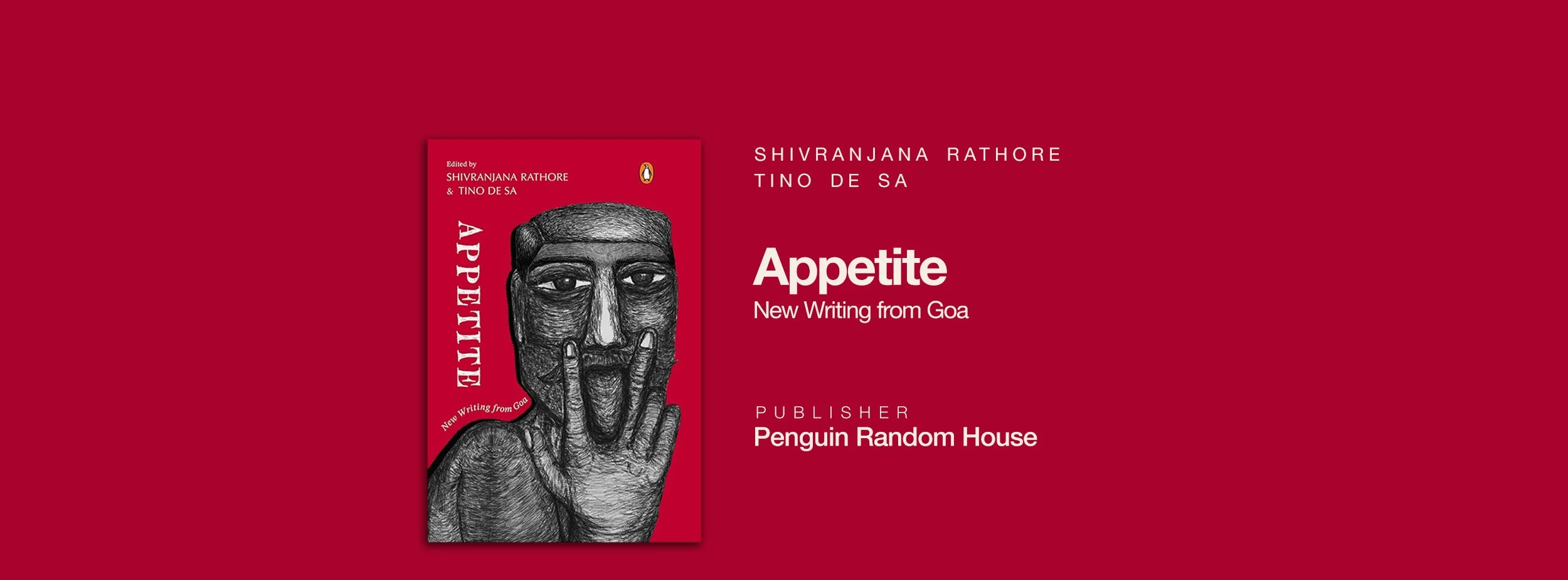
Appetite: New Writing from Goa (2026), edited by Shivranjana Rathore and Tino De Sa, arrives at this uneasy, tender moment.
This anthology, published by Penguin Ebury Press, does not offer the Goa of brochures, magazines and Instagram reels. The obedient palm tree, the obliging sunset, the well-lit cocktail. Instead, it gives us a lived-in Goa: kitchens thick with memory, villages negotiating the past and the present, families grappling with fate and change, and a landscape that is learning to survive its own desirability.
What emerges is not a cohesive narrative, but a chorus of voices — stories, poems and essays about people's appetite for land, food, status, belonging, love, identity and more.
In Clyde D'Souza's Sorpotel, food becomes inheritance and battleground at once. In Tino De Sa's Happy Hearts Beach Resort, humour arrives with a quiet wit, gently exposing the theatre of hospitality and the fragile economies behind curated happiness.
Then there is The Real Housewives of Assagao, which reads like social satire.
Sheela Jayawant's The Divide traces the intersections of pleasure, class and entitlement with an honesty that refuses moral comfort.
There is also the essay A Vegetarian Goan Writes to Digest, in which Rachana Patni writes interestingly about her own explorations to find vegetarian Goan fare as a Jain. She contemplates how appetite can be divine — and also an insatiable urge to consume.
Salil Chaturvedi's poem To Paula (name changed) and Her Mum is cheeky and funny, and surprisingly shares space with thought-provoking pieces that read like inner monologues — such as Pragya Bhagat's Eulogy.
One of the anthology's strengths is its refusal to smooth its edges. The stories, poems and essays vary in tone and ambition; translation sits alongside English writing. This unevenness feels intentional.
Perhaps what holds the collection together is not theme but texture — the atmospheric quality that is hard to miss.
Importantly, the editors resist the temptation to claim this as the Goa, at a time when debates around belonging, settlement and entitlement grow sharper. This is not a definitive narrative. It is a field of voices — sometimes nostalgic, sometimes angry, sometimes amused, sometimes quietly grieving.
There is humour here. There is sensuality. There is curiosity. There is the stubborn everydayness of people continuing to cook, love, date, gossip, renovate, plant, leave, return.
What this anthology understands — and what makes it quietly powerful — is that Goa today is not only being consumed by others. It is also consuming its own myths, its own past, its own ideas of itself.
You close the book without a single image of Goa. Instead, you are left with its aftertaste — complex, contradictory, unfinished.
And perhaps that is the most honest way to encounter a place that so many people think they already know.